

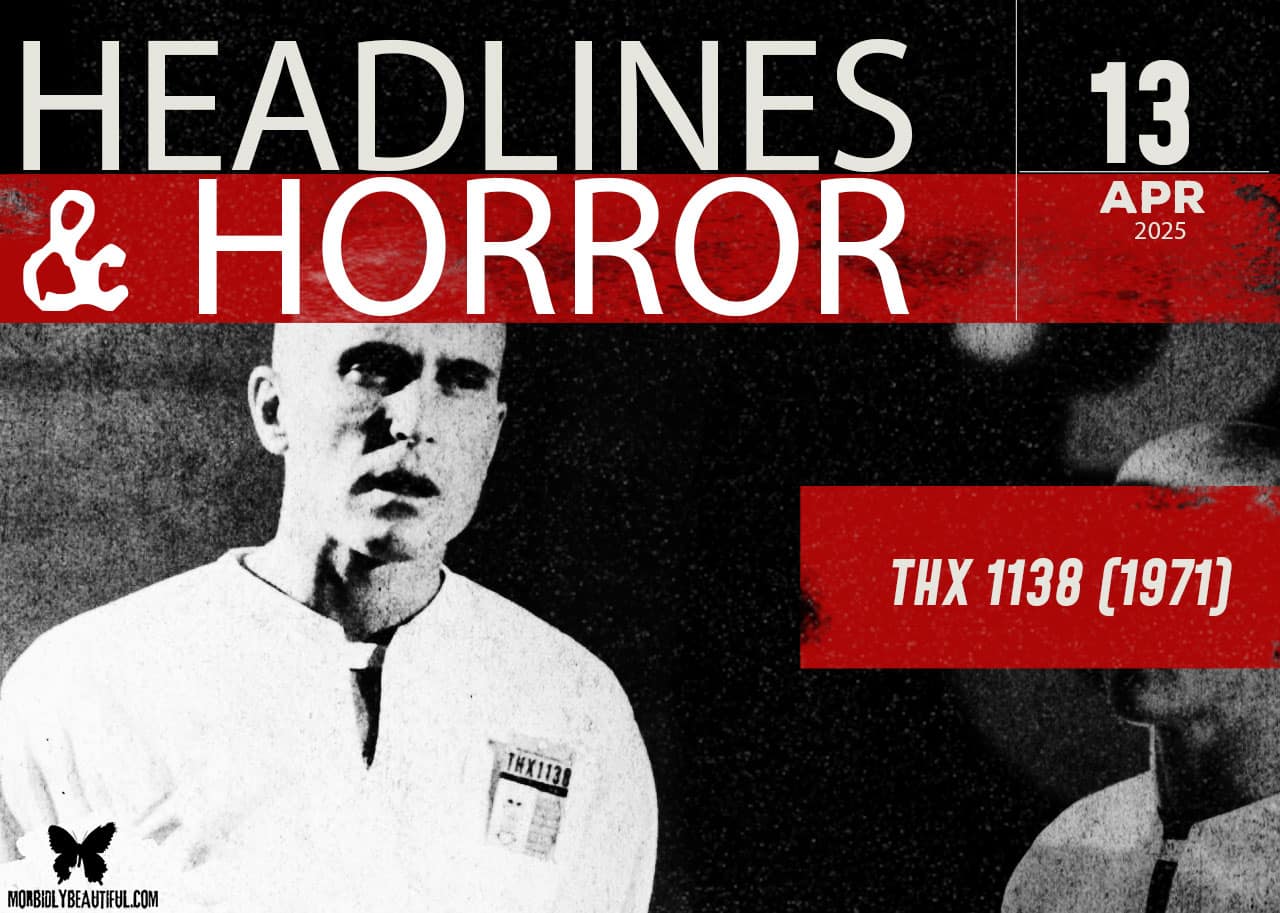
George Lucas’s chilling debut “THX 1138” is an Orwellian horror that offers a bleak vision of the future where identity is erased by control.
No time to read? Click the button below to listen to this post.
What happens when technology doesn’t liberate us, but quietly cages us? When freedom is reduced to a budget line item, and the pursuit of happiness is funneled through consumption and sedation? George Lucas’s THX 1138 may not be a traditional horror film, but make no mistake: its vision of the future is the stuff of nightmares — sterile, silent, and suffocating.
Released in 1971, THX 1138 imagines a subterranean society where individuality has been sacrificed at the altar of order. Everyone is medicated into compliance, surveilled constantly, and addressed not by name but by dehumanizing alphanumeric codes. Love, sex, and even emotional discomfort are criminal acts. It’s not the future of flying cars; it’s the future of flattening the human spirit in the name of productivity and peace.
And disturbingly, it feels more relevant now than ever.
THE RIGHT FILM FOR THE RIGHT TIME
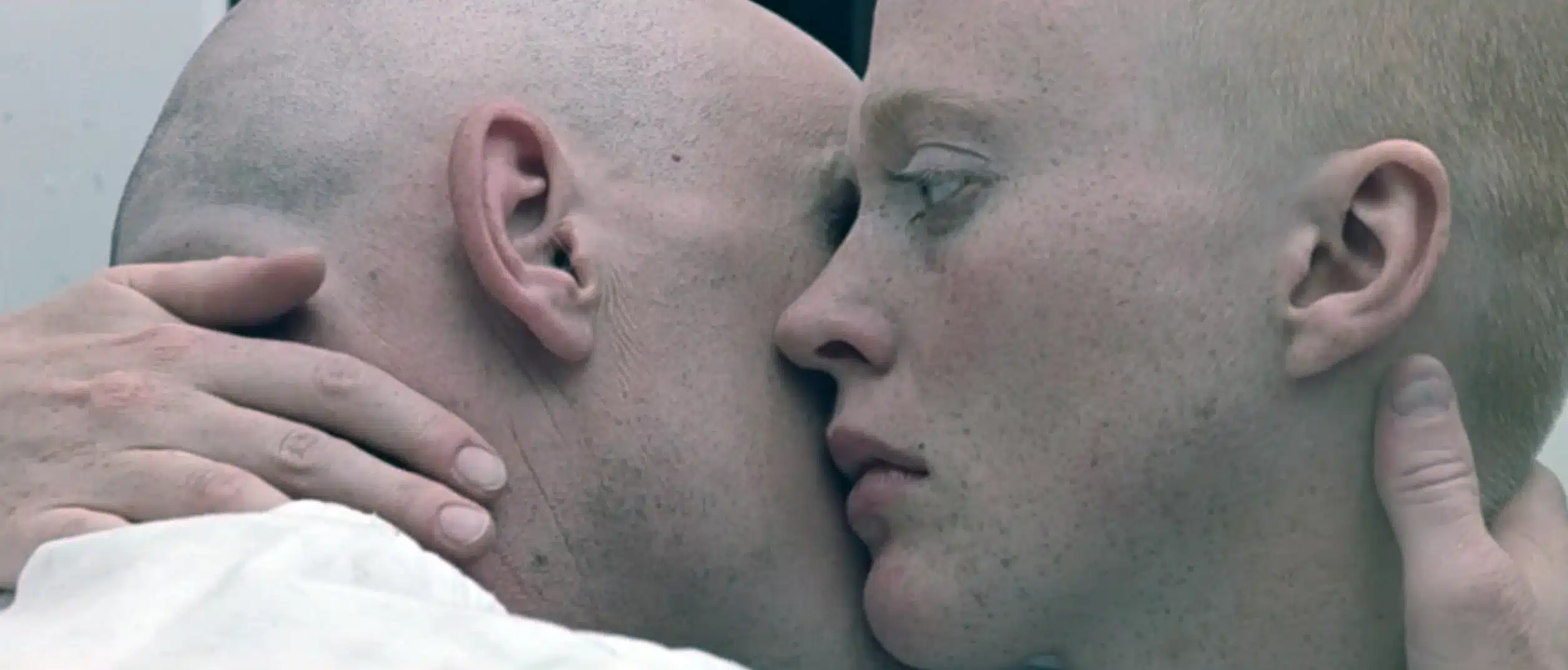
“You’re only free if you can afford to be. That was always the terrifying part of that world for me.” — George Lucas
At the heart of THX 1138 is a chilling depiction of control and conformity.
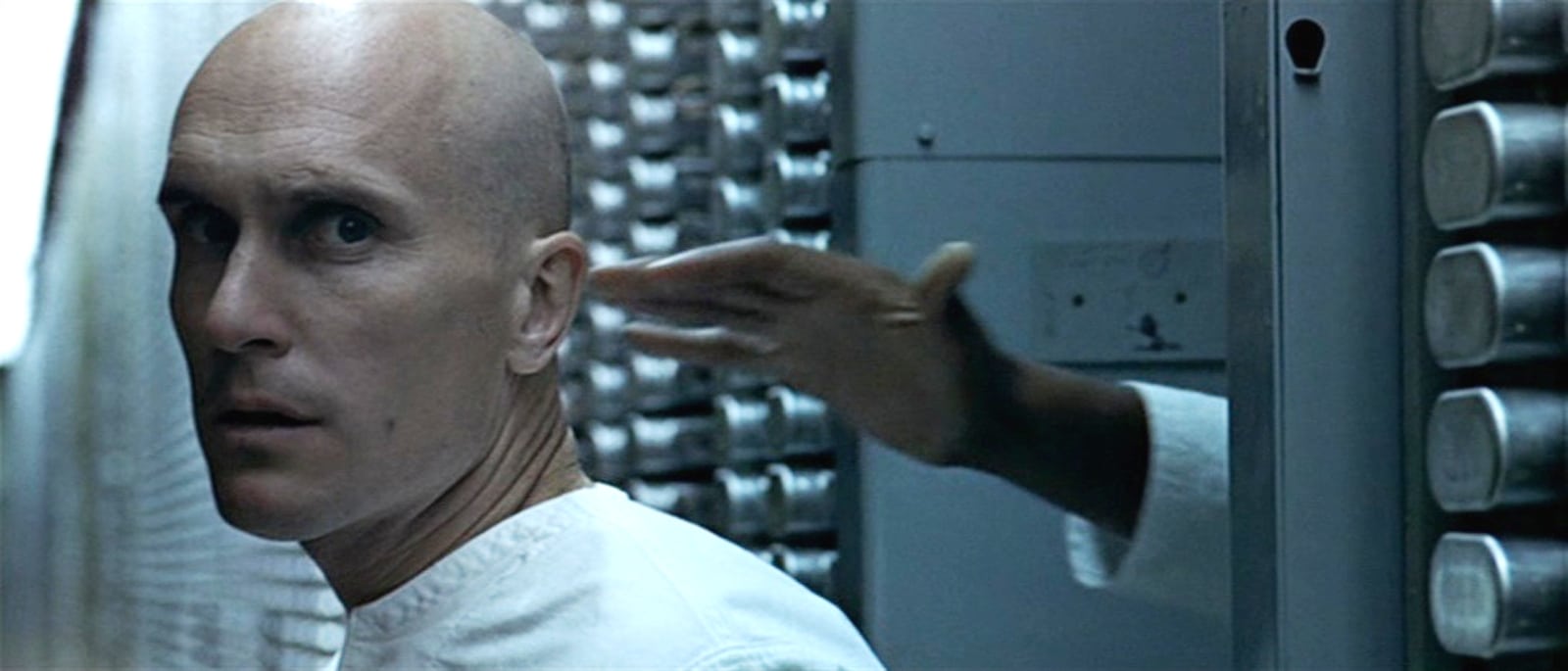
Citizens wear identical white uniforms, their heads shaved clean, their feelings dulled by mood-altering pharmaceuticals. It’s a world of uniformity where the most significant threat isn’t war, it’s feeling too much. The regime’s genius lies not in overt violence, but in bureaucratic dehumanization. Automated confessionals deliver meaningless platitudes. Intimacy is criminalized. Pornographic holograms and masturbation machines replace human connection.
This is the horror of being reduced to a function—a cog in a bloodless machine.
Lucas replaces the archetypal evil dictator with something arguably more terrifying: a faceless, technocratic bureaucracy. In this world, technology is not a tool of liberation but a mechanism of oppression. Android police enforce laws with cold precision. Surveillance systems monitor every move.
Even when THX (a young and captivating Robert Duvall) finally escapes, it’s not because he wins a revolution; it’s because the pursuit becomes too expensive to continue. He slips through the cracks not due to triumph, but because the system deems his capture fiscally inefficient.
Though over 50 years old, THX 1138 speaks directly to our current moment—a time of growing unease about the tradeoffs between convenience, control, and conformity.
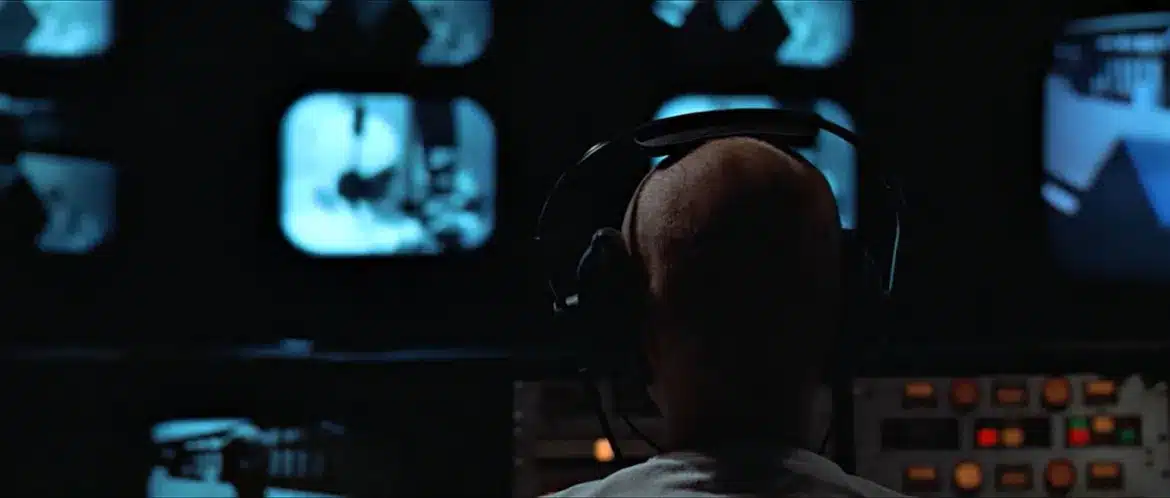
The film’s omnipresent eyes echo our own digital lives, where governments track metadata, corporations harvest our habits, and we willingly carry surveillance devices in our pockets. Like the citizens of THX’s world, we’re always being watched, even when we don’t feel it.
In a world of algorithmic manipulation, AI regulation debates, and social media-induced dopamine loops, THX 1138 warns of what happens when technology shapes not just behavior, but identity. The film’s mandatory emotional regulation eerily parallels current conversations about the over-medication of mental health, toxic positivity, and the digital numbness brought on by constant connectivity.
“Buy more and be happy” isn’t a sci-fi mantra anymore—it’s a real-world coping mechanism for existential dissatisfaction.
Our world drowns in dopamine-driven purchases, each click pulling us further from genuine connection and autonomy.
In an era of echo chambers and online avatars, the erosion of individuality has become insidious. Filter bubbles create conformity of thought, and algorithmic feeds reward sameness.
Like THX, many people feel trapped in systems designed not for expression but for optimization.
WHY IT MATTERS
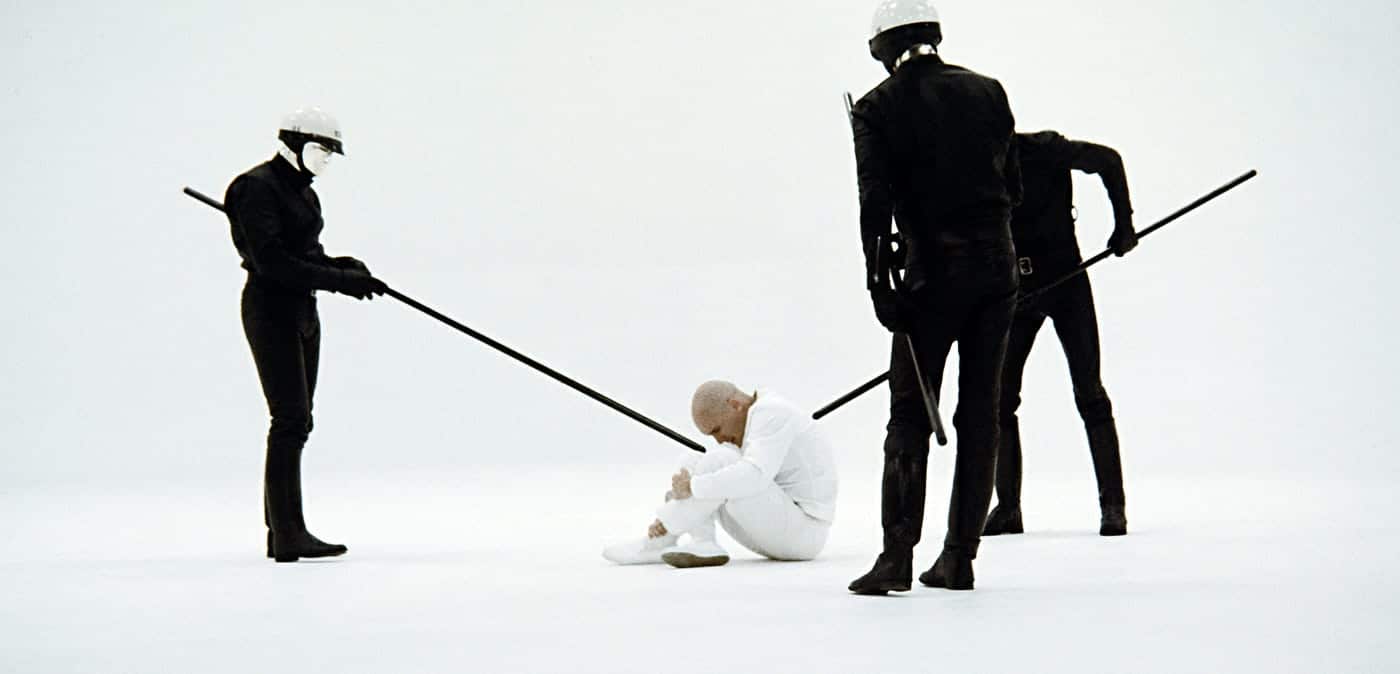
THX 1138 isn’t an action-packed rebellion tale or an escapist fantasy. It’s slow, clinical, and haunting. But that’s the point. Its horror lies in the silence—the passive acceptance of systems that strip us of identity, intimacy, and impulse. It’s a world where freedom isn’t crushed in flames but quietly forgotten under fluorescent lights.
Lucas once described THX 1138, American Graffiti, and Star Wars as an “Escape Trilogy” with each film examining the human desire to break free from the systems that define us.
Star Wars gave us a galaxy to run toward. THX 1138 shows us what happens when there’s nowhere left to run.
WATCH THX 1138 NOW

If you’re a horror fan drawn to existential dread, THX 1138 delivers in spades. It’s not monsters or gore; it’s the terror of becoming obsolete in your own life. The film asks us to consider: What does it mean to be human when humanity is an inconvenience?
It’s a quietly horrifying vision… and that’s what makes it essential viewing. In a world increasingly driven by metrics, conformity, and mechanized “progress,” THX 1138 forces us to ask the uncomfortable questions.
And perhaps more importantly, to remember what it feels like to ask them at all.
Sidenote: It also stars a couple of young future horror icons: Donald Pleasence (he steals the show in this) and Sid Haig.
THX 1138 is currently available to rent on most VOD platforms.
WATCH MORE HORROR
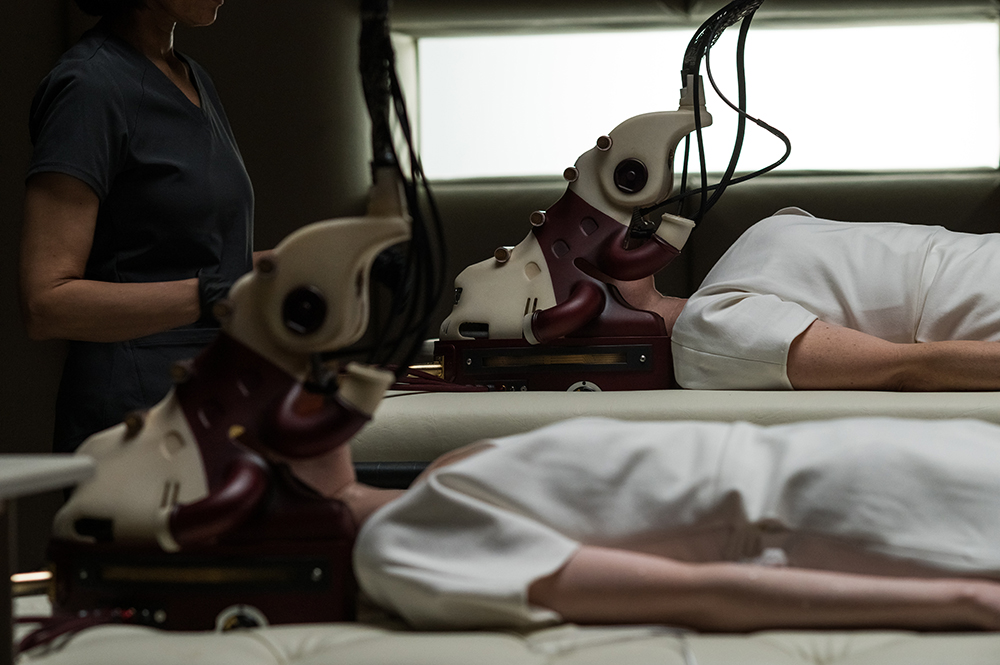
If THX 1138 leaves you craving more films that explore the horrors of bureaucratic control, dehumanization, and surveillance, here are a few essential (and unsettling) companions:
Brazil (1985, dir. Terry Gilliam)
A surreal, Kafkaesque nightmare where paperwork is deadlier than bombs. Gilliam’s retro-futurist vision is absurd, hilarious, and terrifying in equal measure. Bureaucracy has never looked so baroque—or so inescapable.
Alphaville (1965, dir. Jean-Luc Godard)
This French New Wave sci-fi noir imagines a city ruled by a sentient computer that outlaws emotion. Existential dread, poetic rebellion, and a trench coat — it’s like THX 1138 by way of Bogart.
The Trial (1962, dir. Orson Welles)
Based on Kafka’s novel, this black-and-white descent into paranoia follows a man prosecuted by an unseen authority for a crime never explained. The horror lies in the absurdity of logic gone mad.
Possessor (2020, dir. Brandon Cronenberg)
A brutal, cerebral body-horror thriller about identity, control, and corporate influence. Like THX 1138, it blurs the lines between autonomy and obedience, reality and role-playing.
Anon (2018, dir. Andrew Niccol)
From the director of Gattaca, this underrated sci-fi noir imagines a world where privacy no longer exists and every moment is recorded — until a woman with no digital trace upends everything.











Follow Us!