Tiff Romania 2025: Bold Visions and Beautiful Nightmares




What if the Great Old Ones from H.P. Lovecraft’s cosmos were not some ancient evil, but misunderstood?
What if they were, basically, friendly creatures who just looked fishy (in every sense)? And what if they could give humans strange powers, which said humans in turn might use to become contract killers—like the taciturn protagonist (Ingrid García Johnson) in the ruthless, crime-infested world of Pablo Hernando’s noir horror? And what if they would hug their humans and heal them with weird oozing liquid?
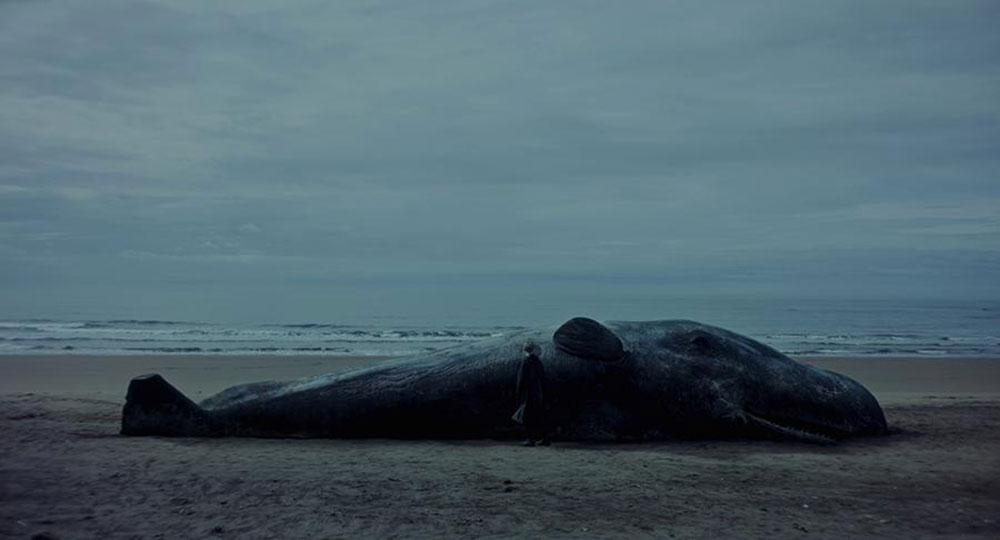
This is basically the cinematic concept of the Spanish director-writer’s fourth feature. It’s a saturnine, stylish genre piece, but also exhaustingly smug and slick as the oily skin of its mysterious maritime monsters.
With tentacled kraken faces and giant elephantine bodies, these beings are obviously inspired by Cthulhu.
Like Lovecraft’s ancient abominations, they inhabit a parallel world that resembles a blend of lunar landscape and underwater realm. They have been in contact with Earth’s cultures for ages, receiving human sacrifices (but again, don’t blame the sea creatures; perhaps they never asked for these), and occasionally extending their tentacles to human beings.
Why and with what intentions is never clear.
With all its stereotypes, the latter serves almost as an involuntary structural counterpiece to the horror narrative.
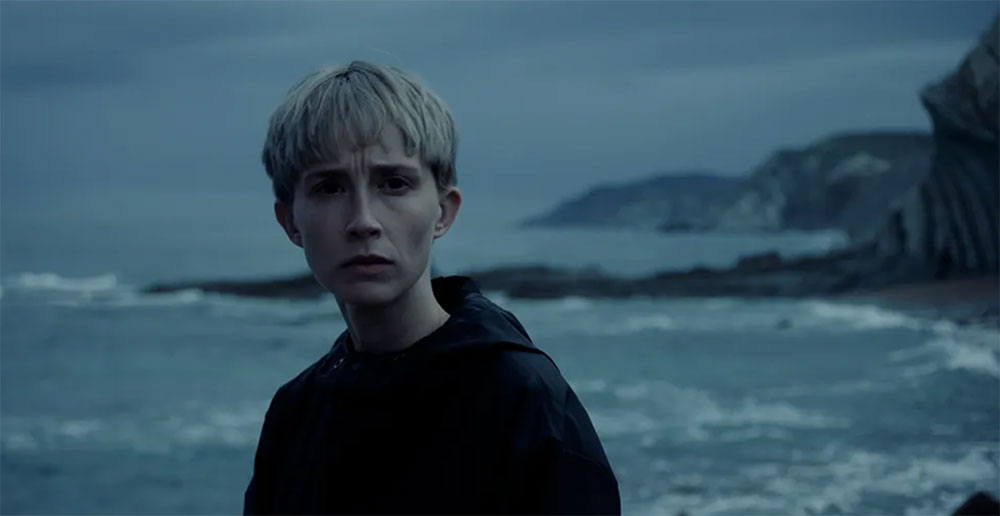
Ingrid’s superhuman abilities, which she received as a child from the sea beings, allow her to disappear without a trace from crime scenes. While Garcia Johnson’s performance is occasionally enigmatic, a lack of character development makes her more of a female foil for well-worn genre tropes.
Her swimming cap-like head cover and dark raincoat give her a jellyfish-like, amorphous silhouette. She hardly speaks and is either isolated or fiercely individualistic in both her work and life. That detachment marks the end of an uneasy cooperation with aging crime boss Melville (a routine performance by veteran actor Ramón Barea).
The contraband trafficker’s name is a double reference to Jean-Pierre Melville and Herman Melville.
The first is the director of the seminal French noir Le Samouraï, starring Alain Delon as a silent contract killer, much like Ingrid. The second is the author of the quintessential whale novel, Moby Dick.
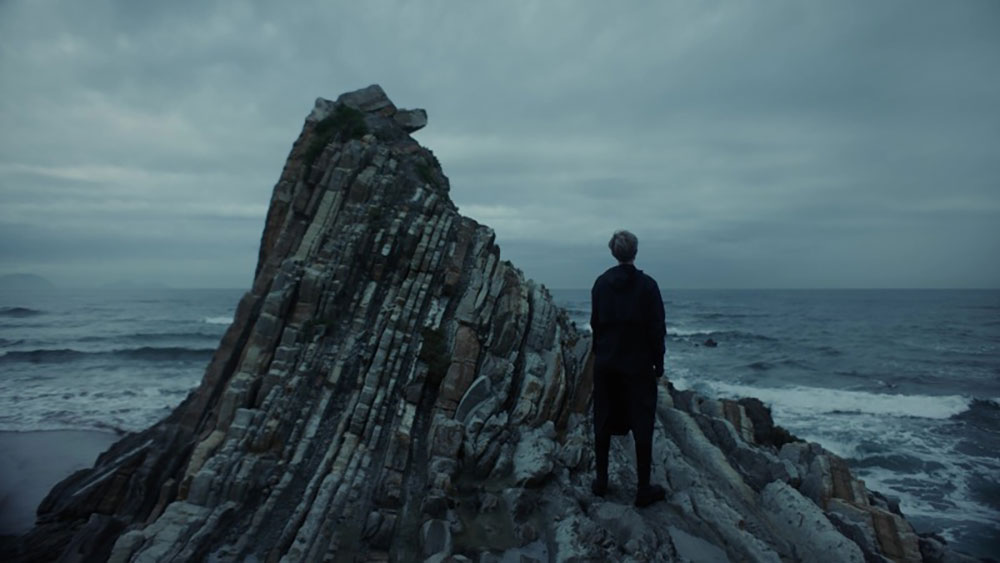
Because in Hernando’s mind, there can never be too much symbolism and references, Ingrid’s father was also a whaler.
Melville replaces this apparently deceased father figure with a paternal protectiveness that always retains a vague threat. In addition, he is tasked with procuring an ominous artifact connected to the mythological maritime monsters for a dying businessman. One can only speculate that this almost unseen figure hopes to regain new health or even eternal life.
Another side plot involving Ingrid’s deadly talent and a former friend turned enemy of Melville almost shifts the narrative focus completely from her to the jaded crime boss.
Hernando’s belated attempts to amend his own story’s unevenness result in numerous loose ends. However, this is a film that derives its curious attraction from cinematographer Sara Gallego’s gorgeously phantasmagoric images, drenched in rich blacks, grays, and oscillating dark blues. A somber soundscape by Andrea Sáenz Pereiro, with music by Izaskun González, evokes an aura of unspoken sadness and doom.
The aestheticized horror lies in the unknown and the unconscious, for which the submarine specters provide a fitting analogy.
It’s a flawed but fascinating exercise in style and suggestion over substance, which, like its monsters, is most disturbing when it remains undefined.

She’s a lover, he’s a fighter. Together, they’re CHEER AND LOATHING. Tune in to hear your hosts, Stephanie (Cheer) and Casey (Loathing), clash over the films they love — and the ones they love to hate.
In this holiday extravaganza episode of Guilty Pleasures, join hosts Stephanie, Kelly, and our newest addition, Jonathan (Jack was tied up in tinsel and couldn't join us), as they unwrap the bizarre and unhinged world of holiday cinema. They dive into the depths of Elves, a film that's as chaotic as it is entertaining. It's a sleigh full of questionable decisions, diabolical dialogue, absurd plot twists, wildly offensive antics, and unhinged holiday mischief.
And that's not all! In the second half of the podcast, join your festive cinephile friends for a look at four more ”nutty as a fruitcake” holiday treats: A New York Christmas Wedding, Elf Bowling, A Medea Christmas, and Jack Frost. Plus, we each offer a bonus Christmas flick guaranteed to make you say, ”Ho, Ho, HO-LY Hell!”
Expect laughter, disbelief, and a spirited debate about what truly makes a movie a guilty pleasure. Don't miss this festive journey through the weirdest corners of holiday films!




Follow Us!