

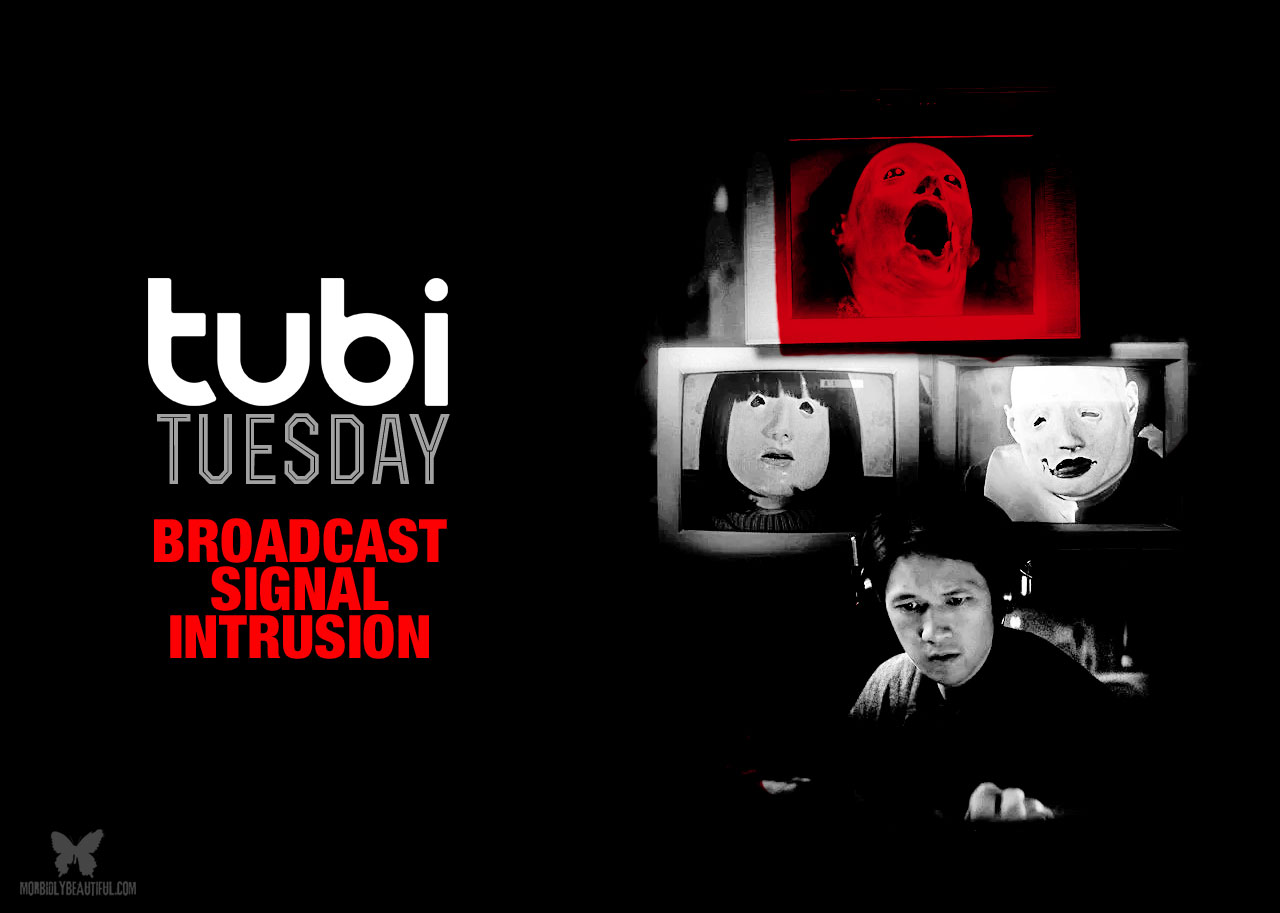
“Broadcast Signal Intrusion” is a paranoid thriller about lost media, mysterious broadcast hijackings, and one man’s descent into obsession.

No time to read? Click the button below to listen to this post.

In the current digital age, when practically any piece of information is just a Google search away, lost media takes on an almost mythical dimension. We like to think everything’s been recorded, archived, and backed up in triplicate, but that’s often not the case. Much of the media from the pre-digital world has never been seen since, and may no longer exist in any form.
Despite this, the very notion that there are things out there that have never been found seems almost impossible.
Plenty of movies and TV shows have based their stories around this sense of information unease, particularly when said lost media takes on a more sinister dimension. Movies like David Cronenberg’s Videodrome, Joel Schumacher’s 8mm, and the Netflix series Archive 81 all tap into the secrets contained in forgotten or hidden media, conjuring a sense of a whole dark underworld just below the surface.
In 2021, Jacob Gentry’s Broadcast Signal Intrusion joined their ranks.
In many ways, Broadcast Signal Intrusion is a fairly standard paranoid thriller in the vein of Brian DePalma’s Blow Out, where a man loses himself the deeper he digs into the secrets contained within a recording. Even so, it’s an effective one, though it might leave some cinematic sleuths feeling unsatisfied.

Harry Shum Jr. stars as James, a solitary man eking out a quiet living as a video archivist in late-90s Chicago. While archiving a rather ordinary-seeming news broadcast, he stumbles upon a strange, eerie video that was spliced onto the airwaves, depicting some kind of robotic female figure and what appears to be, at first, a random series of noises.
Intrigued, he discovers that there were actually two known intrusions of its kind, along with an as-yet-uncovered third incident from years later.
Digging deeper, he learns that each intrusion lined up with the date a Chicago-area woman went missing, with the third date happening to coincide with the disappearance of his wife, Hannah. James sets off on an odyssey to find the third tape and uncover the truth behind its origin, possibly learning the fate of his wife in the process.
If you’ve seen one of these movies before, you likely know it doesn’t always go smoothly.
Much like its forebears, like Videodrome or 8mm, Broadcast Signal Intrusion derives its power from its proximity to reality.

Similar interruptions have occurred in the real world, including Chicago’s infamous “Max Headroom Incidents,” in which a hacker dressed as the eponymous ’80s character hijacked broadcasts on WGN and WTTW. Much like the pirate in Broadcast Signal Intrusion, the culprit was never identified.
The intrusions themselves, created by prolific VFX designer Daniel Martin, are effectively skin-crawling, tapping into the same vein of uncanny weirdness as early internet curiosities like John Bergeron’s “I Feel Fantastic” or David B. Earle’s “Dining Room or There is Nothing.”
Those shorts provoked a fair amount of online speculation of their own, the former in particular thought by some message board sleuths to be the work of a serial killer.
It’s that gulf between concrete fact and wild speculation that animates Broadcast Signal Intrusion. James grows so desperate for answers, for some relationship between these broadcasts and his wife’s disappearance, that he’s willing to connect dots that probably aren’t meant to be connected.
Many critics who gave the film a negative review said that the ending was a big letdown, but I actually found it to be an effectively murky way to bring James’s journey full circle.

James isn’t just some outside observer dedicated to the truth; he wants answers for himself and, ideally, retribution. Gentry, along with screenwriters Phil Drinkwater and Tim Woodall, cannily leaves it ambiguous as to whether the answers James finds are true or the product of his obsessed mind.
Shum makes for an appealing everyman, and the rest of the cast, including many Chicago-based actors, does an excellent job of elevating the film’s pulpy premise. As a former Chicago resident, I always enjoy seeing the city I called home for a decade depicted onscreen, and Gentry draws from the Big Onion’s deep well of talent for many of his players.
The film does lose some steam in its middle third, but the unsettling conclusion brings it home, ending on an ambiguous note that proves that, while James may think he found his man, the broadcasts aren’t done with him yet.
Some viewers might find that Broadcast Signal Intrusion’s juice isn’t worth the squeeze, but for those who enjoy a paranoid thriller, especially one that mines the morbid fascination with lost or dark media, it might be worth pressing play.
Overall Rating (Out of 5 Butterflies): 4









Follow Us!