Meat Machine, Marginalia, House of Ashes, Sugar Rot, Tonight and Maybe Tomorrow
No time to read? Click the button below to listen to this post.
MEAT MACHINE
Jeffrey Garcia’s Meat Machine is what happens when you shoot a nuclear farce on Hi8 tape with $3,000, a hundred locals, and zero shame. San Marcos, Texas becomes Reedville—a town too distracted by affairs, gambling, and grotesque misadventures to notice the atomic bomb hurtling toward them. The President wears a stained wife-beater; a mad doctor pulls a baby from his assistant’s throat; husbands gamble away lives; and a barber named Bosco makes passes at a kid named Junior High.
It’s purposefully filthy: bad wigs, obscene one-liners, cardboard sets, and every bodily function imaginable.
At first, it feels unwatchable—juvenile, offensive, even repellent. Then the rhythm clicks. You realize the cheapness is the joke, the offensiveness is the point. Garcia leans into “shot-on-shiteo” aesthetics so hard that the visible cameraman reflected in sunglasses and the superimposed baby face become comedy gold.
Like Clerks on acid with Troma DNA, it offends because it wants to. It offends because it needs to. The cast is fully committed to this carnival of degenerates, and somehow their joy bleeds through the grime. By the time Satan shows up like a South Park gag and a rotten-toothed man croons a pop hit called “I’ve Never Had a Woman Love Me,” you’re either checked out or deliriously entertained.
Bottom Line: A proudly offensive trash opera that loops from unwatchable to unhinged to, yes, kind of brilliant. Don’t watch it sober. Don’t watch it sane.
MARGINALIA
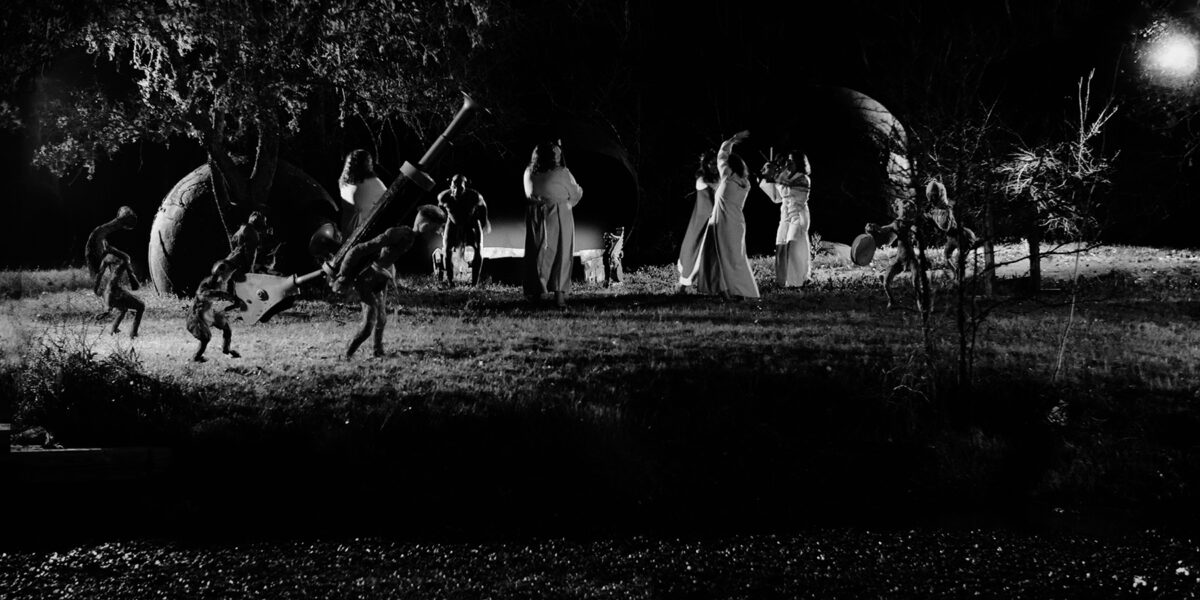
Mark Beal’s Marginalia looks like a medieval manuscript sprung to life. In black-and-white, with gorgeous stop-motion and shadowplay, it follows Sister Trista as she arrives at a convent to mourn the abbess—and discovers witches, demons, and killer rabbits.
Made for $5,000, with Beal singlehandedly writing, animating, filming, lighting, and prop-making, the artistry is staggering. The film feels both like a Hammer horror mood piece and a silent-era experiment, with Alexander Hellonious’s score completing the spell. It’s a nun-goth fairytale with stop-motion soul and proof that invention beats money.
It’s not designed to scare in the conventional sense. Instead, it captivates with ritualistic pacing, hypnotic imagery, and a final act that unravels into unholy delirium. By leaning on tactile creativity instead of spectacle, Marginalia becomes a miniature work of art that lingers.
Bottom Line: Sixty minutes of handmade enchantment. A black-and-white fever dream where nunsploitation meets Häxan. Beautifully bizarre, beautifully handmade.
HOUSE OF ASHES
Izzy Lee’s House of Ashes takes the horrors of misogyny and makes them literal. Mia (Fayna Sanchez) returns home after the loss of her husband and child, only to be sentenced to house arrest under a draconian law that criminalizes miscarriage. With an ankle monitor, hostile officials, and a doting but increasingly suspect boyfriend (Vincent Stalba) tightening the noose, Mia’s grief descends into paranoia. Are ghosts haunting her, or is reality itself gaslighting her?
Lee paints the home in surreal giallo hues that blur reality and vision. Each unsettling apparition reflects the suffocating weight of patriarchal control. Sanchez is heartbreaking, vacillating between vulnerability and defiance; Stalba layers Marc’s surface kindness with chilling obsession, an unsettling study in entitlement.
It’s both a supernatural thriller and a sociopolitical statement—one that feels terrifyingly plausible. It’s about bodily autonomy staged as a haunting: the surveillance of women, the “nice guy” mask curdling into control, the way trauma is picked over by institutions and men who call it concern. But the politics never smother the genre; they charge it.
With a mostly single location, Lee builds a pressure cooker where dread accumulates like smoke and then ignites.
Bottom Line: Claustrophobic, beautifully lit, and nerve-jangling—a feminist fever dream about about grief and control that marks a stunning feature film debut for Lee.
SUGAR ROT
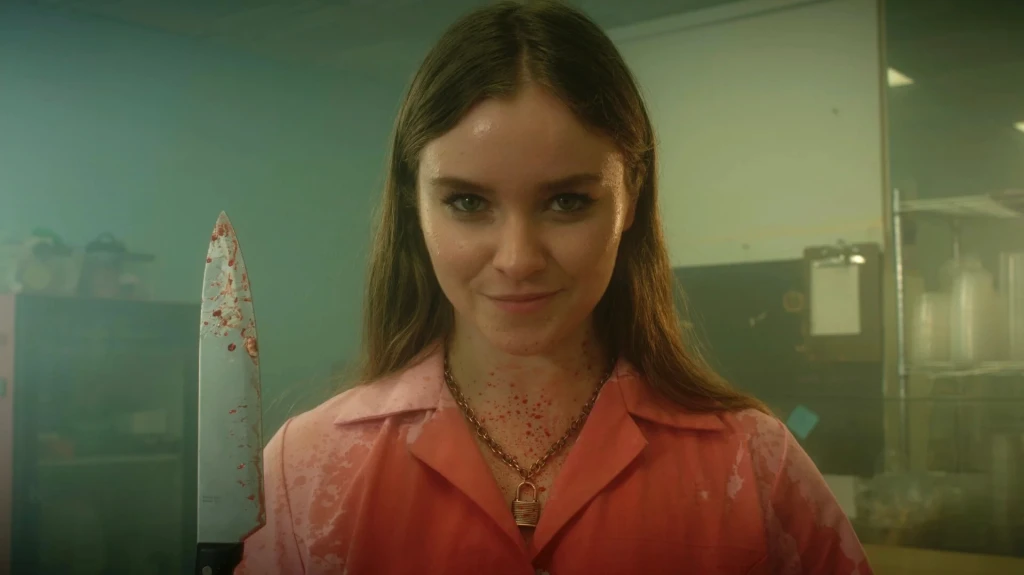
Becca Kozak’s Sugar Rot is punk cinema at its most grotesque and feminist, weaponizing satire and goop. After being assaulted by a sleazy ice-cream man, Candy (Chloë MacLeod) discovers she’s pregnant, and her body is literally turning into sweets. Her boyfriend takes bites out of her, her doctor wants to exploit her, and her best friend covets her baby.
Shot with real ice cream, sticky and freezing, the film commits to its handmade nastiness. A colorful palette collides with Troma gross-out, resulting in jelly-bean nightmares and candy-coated body horror. There’s a grindhouse smirk—gratuitous nudity, juvenile gags, and an escalating parade of lurid tableaux—but the feminist critique bites hard: medical-religious gatekeeping, compulsory motherhood, fat-shaming, the denial of care wrapped in piety.
The second half flattens into repetition and some jokes overstay, but the commitment to tactile gross-out and the punk soundtrack keep the engine humming. It’s profane, sticky, fearless, and sometimes exhausting. But that’s the point.
This isn’t polite horror. It’s an ugly scream about uglier truths. A culture that calls women “sweetie” will, if allowed, eat them alive.
Bottom Line: A feminist exploitation howl that’s sleazy, sticky, and sharper than it looks.
TONIGHT AND MAYBE TOMORROW
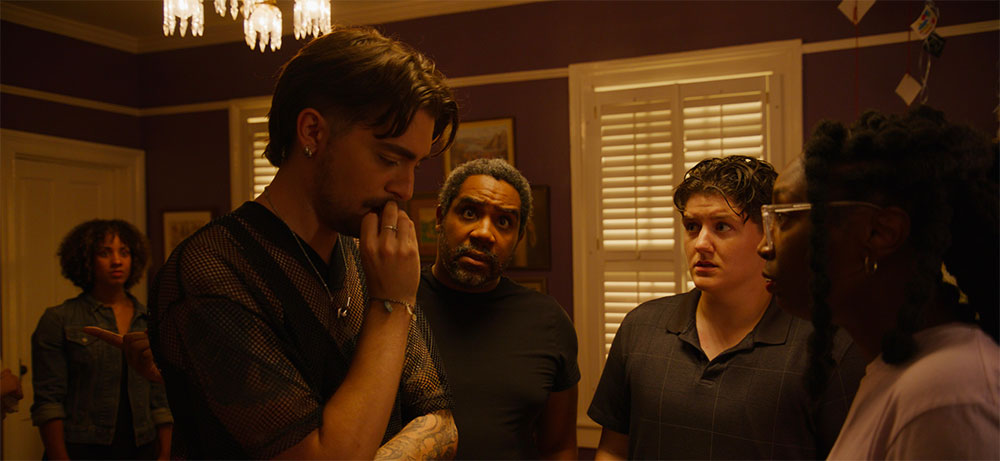
Michael Smallwood’s Tonight and Maybe Tomorrow isn’t interested in how the world ends—only in how people cling to each other when it does. The apocalypse is hinted at in “waves,” but never shown. Instead, we’re locked inside a house party on the last night of existence, where two almost-lovers decide to finally have their first date.
It’s intimate and aching, more Before Sunrise than Mad Max. The performances glow with humor, regret, and humanity. There is chemistry that feels lived-in, jokes that sound like breathing, and a spectrum of coping that feels painfully familiar: screaming at the sky, laughing until you cry, hiding in a bedroom because your brain chemistry is your worst enemy… even now.
Some will crave more lore (What’s causing the waves? Who’s fighting where?), but restraint is the point. When tomorrow doesn’t exist, connection is all that matters.
Bottom Line: A tender, talky end-times romance that chooses connection over carnage and finds beauty in presence. Quietly devastating.
Stephanie Malone is the founder, owner, and editor-in-chief for Morbidly Beautiful. Podcaster, producer, writer, illustrator, editor. Tomatometer-approved critic, voting member of the Women Film Critics Association, GALECA, the North Texas Film Critics Association, and official Cherry Picker. Follow her on X at @smalonedesign, Instagram at @srgreenhaw, Blue Sky at @angryprincess.bsky.social. MuckRack Profile: https://muckrack.com/stephanie-malone. Read Full
Sign up to receive weekly recaps of all Morbidly Beautiful posts
Guilty Pleasures
Guilty Pleasures
She’s a lover, he’s a fighter. Together, they’re CHEER AND LOATHING. Tune in to hear your hosts, Stephanie (Cheer) and Casey (Loathing), clash over the films they love — and the ones they love to hate.
Guilty Pleasures: Holiday Special Featuring “Elves”
byStephanie Malone
In this holiday extravaganza episode of Guilty Pleasures, join hosts Stephanie, Kelly, and our newest addition, Jonathan (Jack was tied up in tinsel and couldn't join us), as they unwrap the bizarre and unhinged world of holiday cinema. They dive into the depths of Elves, a film that's as chaotic as it is entertaining. It's a sleigh full of questionable decisions, diabolical dialogue, absurd plot twists, wildly offensive antics, and unhinged holiday mischief.
And that's not all! In the second half of the podcast, join your festive cinephile friends for a look at four more ”nutty as a fruitcake” holiday treats: A New York Christmas Wedding, Elf Bowling, A Medea Christmas, and Jack Frost. Plus, we each offer a bonus Christmas flick guaranteed to make you say, ”Ho, Ho, HO-LY Hell!”
Expect laughter, disbelief, and a spirited debate about what truly makes a movie a guilty pleasure. Don't miss this festive journey through the weirdest corners of holiday films!













Follow Us!