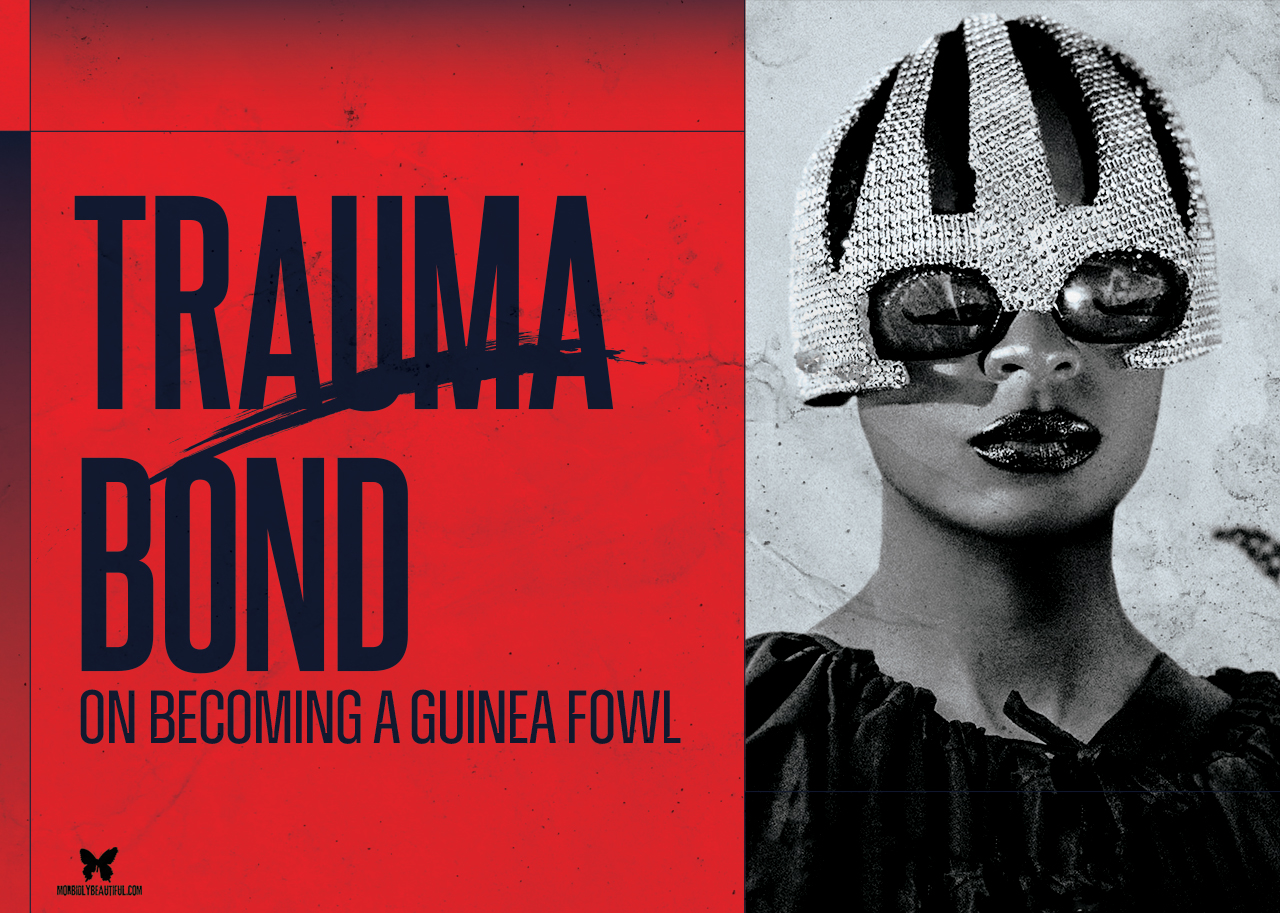
Trauma Bound: On Becoming a Guinea Fowl (2024)



“A guinea fowl warns others of danger. But what happens when no one wants to hear the warning?”

Some films arrive quietly, their impact lingering like a bruise. On Becoming a Guinea Fowl is one such film. It’s an emotionally explosive examination of culturally ingrained misogyny, generational trauma, and the cost of collective silence. Though it first premiered at Cannes in 2024 and was quietly released by A24 in the U.S. earlier this year, this devastating Zambian drama is finally reaching a wider audience via Max. And it demands to be seen.
Nyoni, a Zambian writer/director, follows up her acclaimed debut I Am Not a Witch with a sophomore effort that solidifies her as a powerful voice in cinema. On Becoming a Guinea Fowl is a masterclass in tone, beginning as a beguiling and often humorous exploration of culture, community, and tight-knit family dynamics.

Yet beneath the laughter and elaborate ceremony lies something festering.
This initial jovial atmosphere serves to disarm the viewer, meticulously setting the stage for an arresting and deeply unsettling transformation into an exploration of how devotion to tradition can become toxic and the insidious ways women are often held accountable for the sins of men.
Much like Bedevilled (2010), a film I’ve previously explored for its raw depiction of abuse, On Becoming a Guinea Fowl shines a spotlight on systemic oppression, but with a quiet, almost unassuming power that ultimately delivers a gut-wrenching blow. It explores the unsettling reality of why women sometimes, even enthusiastically, participate in structures designed to subjugate them.
As with Bedevilled, the film shows how women, particularly older women, can become complicit in upholding systems of misogyny, not always through malice, but often through a blind adherence to tradition and maintaining the social order at all costs.

The narrative centers on Shula (Susan Chardy), who drives into the opening scene with an almost detached coolness, encountering the body of her Uncle Fred. Her lack of grief, a striking contrast to her mother’s devastating sorrow, immediately signals a deeper, unaddressed trauma. The jovial, almost absurd, reaction of her wild cousin Nsana (Elizabeth Chisela) further disarms the audience, setting a tone that is initially light and comedic, completely unprepared for the emotional devastation to come.
As the multi-day funeral preparations unfold, the film meticulously exposes the generational divide in how Fred is perceived. Fred’s much younger widow is mocked and rejected. The elders—especially the women—insist on reverence and tradition.
However, the younger women—Shula, Nsana, and Shula’s younger sister Beatrice (Mary Mulabo)—harbor a quiet disdain. This disconnect is slowly, poignantly, and painfully revealed as the source of their discomfort creeps from the shadows.
The celebration of life morphs into a long-overdue reckoning, where the buried past, refusing to bow to the sanctity of present-day rituals, haunts the women through dreams and repressed memories.
Nyoni’s direction is astounding in its control and restraint. She invites us into a culture rich with rituals and respect for ancestry, but also one that protects men at the expense of women, clinging to unity even when it requires silencing truth.
The community, so often portrayed as a sanctuary, becomes a trap. A place where abuse is whispered about but never named; where women carry the blame for the sins of men, and trauma is inherited like family recipes.

Shula’s journey to remember the source of her trauma, tied to a childhood memory of a guinea fowl program, is both delicate and devastating.
Susan Chardy’s spellbinding performance is central to this, as she expertly holds her emotions in check, allowing the inevitable reveal to unfold like an onion being slowly peeled. The film’s quiet and unassuming start gives way to an explosive final act that is simultaneously infuriating and satisfying, devastating but ultimately hopeful.
While not a traditional horror film, it often feels like one in its visceral sense of rage and sadness, amplified by extraordinary sound design and inventive, often surreal visuals.
The clash between modernity and tradition, autonomy and cultural expectation, is palpable. The film explores how lifetimes of transgression are hidden in absurd mundanity, and how an older generation, in the name of family unity, can turn a blind eye to crimes, while a younger generation struggles to find a voice to speak out.
It’s a film that sneaks up on you, planting seeds of unease that slowly bloom into rage. When the final act hits, and hits hard, it feels both shattering and clarifying.
The final seconds, when the meaning of the title is fully revealed, are breathtaking. It’s a message of survival and solidarity. A cry of warning that finally pierces through generations of noise.
On Becoming a Guinea Fowl isn’t a story of vengeance. It’s a story of recognition. Of finally saying aloud the thing that has lingered like a shadow. It reminds us that love without accountability is meaningless—and that sometimes, the most powerful act of resistance is simply to speak.
It’s one of the finest films of the year. Maybe one of the finest I’ve ever seen.
Don’t sleep on this one. Let it move you. Let it make you think. Let it make you angry. And then, let it remind you of the power of your own voice.

She’s a lover, he’s a fighter. Together, they’re CHEER AND LOATHING. Tune in to hear your hosts, Stephanie (Cheer) and Casey (Loathing), clash over the films they love — and the ones they love to hate.
In this holiday extravaganza episode of Guilty Pleasures, join hosts Stephanie, Kelly, and our newest addition, Jonathan (Jack was tied up in tinsel and couldn't join us), as they unwrap the bizarre and unhinged world of holiday cinema. They dive into the depths of Elves, a film that's as chaotic as it is entertaining. It's a sleigh full of questionable decisions, diabolical dialogue, absurd plot twists, wildly offensive antics, and unhinged holiday mischief.
And that's not all! In the second half of the podcast, join your festive cinephile friends for a look at four more ”nutty as a fruitcake” holiday treats: A New York Christmas Wedding, Elf Bowling, A Medea Christmas, and Jack Frost. Plus, we each offer a bonus Christmas flick guaranteed to make you say, ”Ho, Ho, HO-LY Hell!”
Expect laughter, disbelief, and a spirited debate about what truly makes a movie a guilty pleasure. Don't miss this festive journey through the weirdest corners of holiday films!





Follow Us!