Fresh Screams: Five Horror Films to Stream (June 29-July 5)




Love hurts. Family wounds. Friendship corrodes. And sometimes, the people we turn to for comfort become the ones most capable of destroying us.
This week’s Fresh Screams is all about toxic bonds, fractured families, and relationships that devolve into something far more dangerous than ordinary heartbreak. These films explore the many ways intimacy can become a trap:
A dream job built on manipulation, estranged siblings pulled back into shared trauma, a sacred family splintering under divine pressure, best friends addicted to the same toxic ex, and lovers so desperate to fix what’s broken that they walk willingly into a nightmare.
It’s a strong week for messy interpersonal horror, with each pick digging into the terrifying truth that emotional vulnerability can make us easy prey.
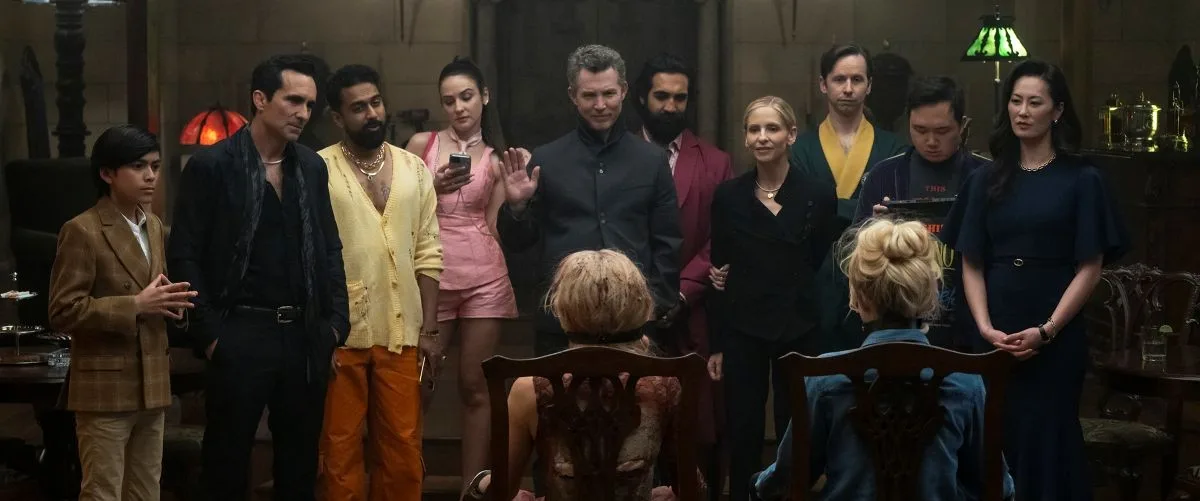
Before we dive in, a quick streaming note: my recent PVOD pick Ready or Not 2: Here I Come is streaming on Hulu starting July 2. It also fits this week’s theme nicely, centering on estranged siblings and the bloody fallout of family obligation. If you missed it during its rental window, now’s a great time to catch up.
Directed by comedy veteran Malcolm D. Lee (Girls Trip, The Best Man) in his first move into the psychological thriller space, Strung is the tonally wild result of a powerhouse collaboration between Jason Blum’s Blumhouse Productions and Tyler Perry’s Peachtree & Vine Platforms.
The story follows Layla (Chlöe Bailey), an ambitious classical violinist striving for a coveted seat in the philharmonic. Desperate for financial stability, she accepts a highly lucrative live-in tutoring position at an opulent, isolated Los Angeles estate.
She is hired by the formidable family matriarch, Audra (Lynn Whitfield), to teach her young granddaughter, Zuri (Romy Woods), an emotionally withdrawn child who hides behind a Dahomey warrior mask. Zuri’s grief stems largely from the death of her father, a successful rap artist who died of an apparent drug overdose when she was four.
Further complicating matters is Zuri’s icy mother, the heavily pregnant Imani (Anna Diop), who is deeply unenthusiastic about Layla’s arrival.
Still, the lavish living conditions and Layla’s instant emotional connection to Zuri make it an enviable gig.

Layla arrives and realizes the child’s influential stepfather, wealthy music producer Derek (Lucien Laviscount), is a man with whom she recently had a passionate one-night stand. And the flames between them are still burning bright.
Soon, the domestic drama spirals into a survival thriller when Layla discovers she has not arrived at the home by fortuitous coincidence, but by carefully orchestrated design.
Beneath the soap-opera betrayals, Strung offers a cynical critique of high-society generational wealth. The upper-class domestic space becomes an inherently predatory environment where love and loyalty are performative veneers used to mask cold-blooded capitalist greed.
The cast is entirely game, leaning full throttle into the script’s theatrical energy. Whitfield is a standout as the menacing matriarch, while Bailey believably transforms from naive optimism to frantic, survivalist terror.
The film looks fantastic, and unsurprisingly, it’s an aural treat as well. That said, the strange blend of psychological suspense with hyper-sexualized melodrama can be jarring. And at nearly two hours, it’s much longer than it needs to be.
Hardcore horror fans may be turned off by the campy soap-opera elements, which diffuse the tension. But for a streamer, there’s low-stakes fun to be had — even if it may not be entirely music to your ears.
Tune in if you like glossy domestic thrillers, sinister rich people, and wicked queens conducting chaos in the kingdom.
“The monsters of the 21st century feed in broad daylight.”
Written and directed by Texas-based filmmaking duo Peter S. Hall and Paul Gandersman, Man Finds Tape is a highly ambitious, genre-bending mockumentary.
The film frames itself as a true-crime documentary directed and narrated by Lynn Page (Kelsey Pribilski). Her subject is her erratic brother, Lucas (William Magnuson), a viral horror YouTuber who operates under the channel name “Man Finds Tape.” Lucas gained internet fame after uploading a disturbing childhood home video he discovered in a barn on their family property in Larkin, Texas.
The grainy tape reveals a childhood trauma involving a young Lucas that the now-grown man has absolutely no conscious memory of.
The mystery escalates into active horror when Lucas sends Lynn CCTV surveillance footage of a brutal hit-and-run murder on a street in Larkin. Strangely, even though multiple local townspeople are standing on the sidewalk directly facing the crime, they all simultaneously experience a brief, hypnotic catatonic state, resulting in a total blackout of the event.
Realizing her hometown is plagued by an epidemic of missing time, Lynn returns to Larkin to investigate. Her deep dive connects the anomalies to a public-access televangelist and a mysterious stranger.
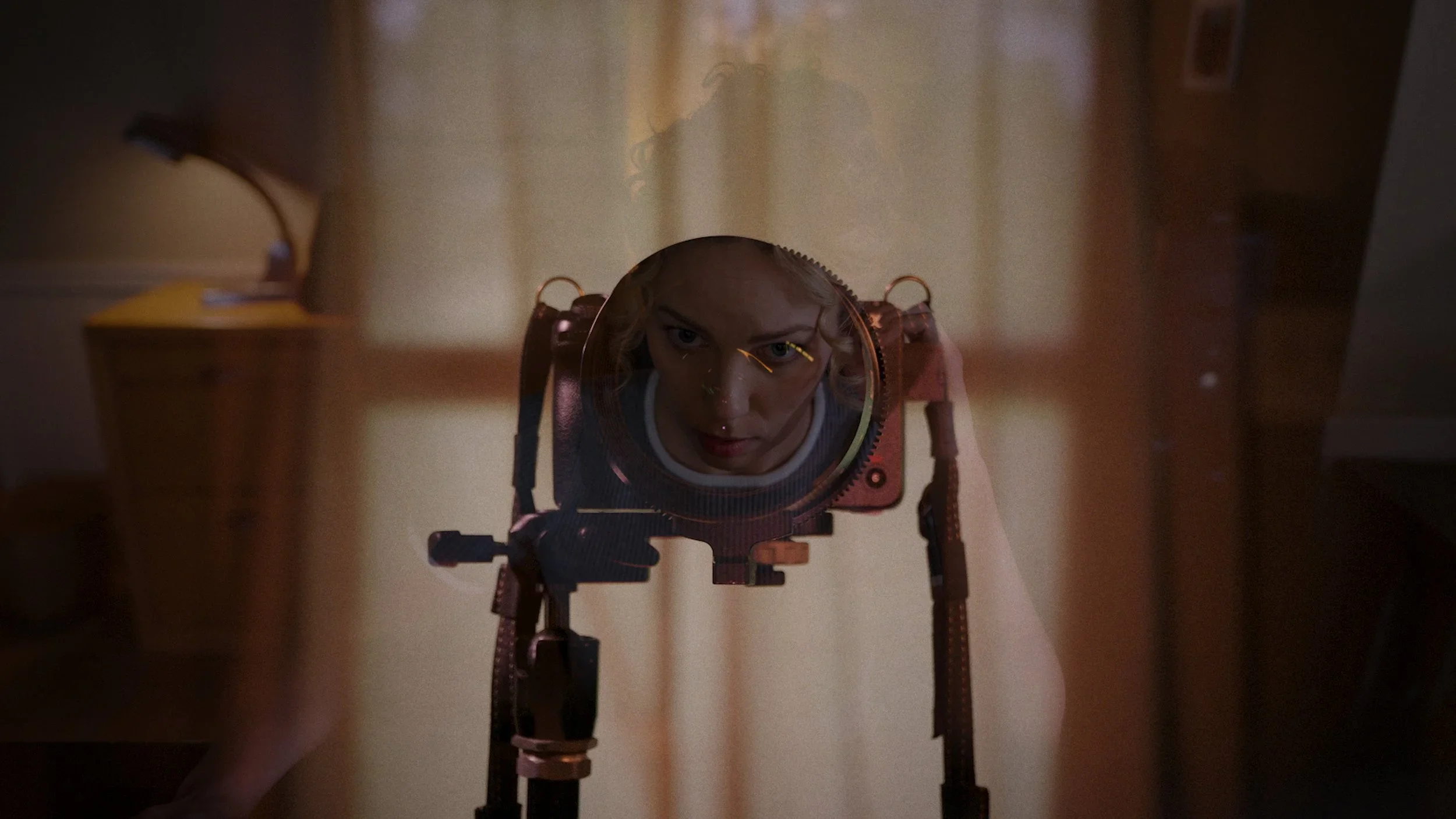
The filmmakers construct a complex narrative puzzle from cell phone videos, closed-circuit security feeds, Zoom screen recordings, text messages, and transcribed 911 audio recordings.
Pribilski and Magnuson deliver authentic, grounded portrayals of estranged siblings that give the increasingly strange mystery a much-needed emotional center. And if you like your horror a bit more layered, Man Finds Tape serves as a sharp metaphor for community complacency and institutional gaslighting.
The missing-time device becomes a chilling metaphor for how communities learn not to see what powerful people need them to ignore.
Unfortunately, the compelling mystery built in the first two acts is far more involving than the answers delivered in the exposition-heavy third act. Minimalist mastery of existential dread gives way to overstuffed lore that feels frustratingly half-baked.
Still, it’s an entertaining watch, aided by its effective and well-crafted practical gore. The unsettling body-horror sequences and practical effects are top-notch.
Even when the narrative stumbles, we are treated to visceral, Cronenberg-esque shock that makes the wild ride worthwhile.
Tune in if you love ambitious found footage, small-town conspiracies, and twisty cosmic dread.
Let’s be honest: I’m never going to not recommend a Nic Cage movie to you — even one as flawed and divisive as The Carpenter’s Son.
Directed and written by Lotfy Nathan, this methodically paced psychological thriller and biblical horror film offers an unorthodox, twisted exploration of the hidden childhood of Jesus Christ. Drawing narrative inspiration from the non-canonical, apocryphal Infancy Gospel of Thomas, the movie boldly reframes the Holy Family’s early years through a lens of domestic anxiety and cosmic dread.
The story takes place in a remote, nameless desert village where a humble craftsman known only as the Carpenter (Nicolas Cage) lives in hiding with his wife, the Mother (FKA Twigs), and their fifteen-year-old child, simply called the Boy (Noah Jupe).
Traumatized by a lifetime of fleeing Roman authorities and suspicious locals, the Carpenter has raised the Boy under a strict blanket of secrecy, concealing his divine origins from the village and even from the Boy himself.
As the pressures of adolescence collide with unexplainable, awakening abilities, the Boy begins suffering from vivid, bleeding visions. To make matters worse, a physical manifestation of Satan gets in the Boy’s head, fracturing the household into a high-stakes struggle between patriarchal control, spiritual temptation, and destructive divine power.

The real horror comes from the immense psychological toll of realizing one is fundamentally different from the rest of humanity.
Rather than portraying Christ’s early miracles as peaceful acts of grace, Nathan frames them as terrifying, involuntary disruptions of the natural order. It’s essentially a dark, mythic coming-of-age allegory about reconciling fragile human emotions with a world-altering destiny.
Cage’s Carpenter is not a serene saint, but a man hollowed out by decades of extreme survival pressure and severe religious devotion.
It’s beautifully shot and drenched in mythic dread, and the narrative takes big swings that I find difficult not to applaud.
However, it’s also frustratingly slow and not nearly horror-filled enough to satisfy hardcore genre enthusiasts. The performances, yes, even from the untouchable Cage himself, don’t always do enough to fully invest audiences in the stakes of the unfolding drama.
Still, you should at least watch it as a curiosity. It deserves credit for its willingness to humanize, interrogate, and explore Jesus’s psychological doubts and earthly struggles.
Tune in if you’re drawn to slow-burn religious dread, Nic Cage curiosities, or strange films that take big swings even when they don’t fully connect.
Written and directed by queer filmmaker Addison Heimann (Hypochondriac), Touch Me is a distinctly original psychosexual sci-fi horror comedy that acts as a live-action, hentai-inspired exploration of trauma and codependency.
Joey (Olivia Taylor Dudley) is a thirty-something woman riddled with severe anxiety and OCD. She lives with her equally messy gay best friend, Craig (Jordan Gavaris). Together, they spend their days enabling each other’s aimless, stagnant behavior until a plumbing disaster renders their apartment uninhabitable.
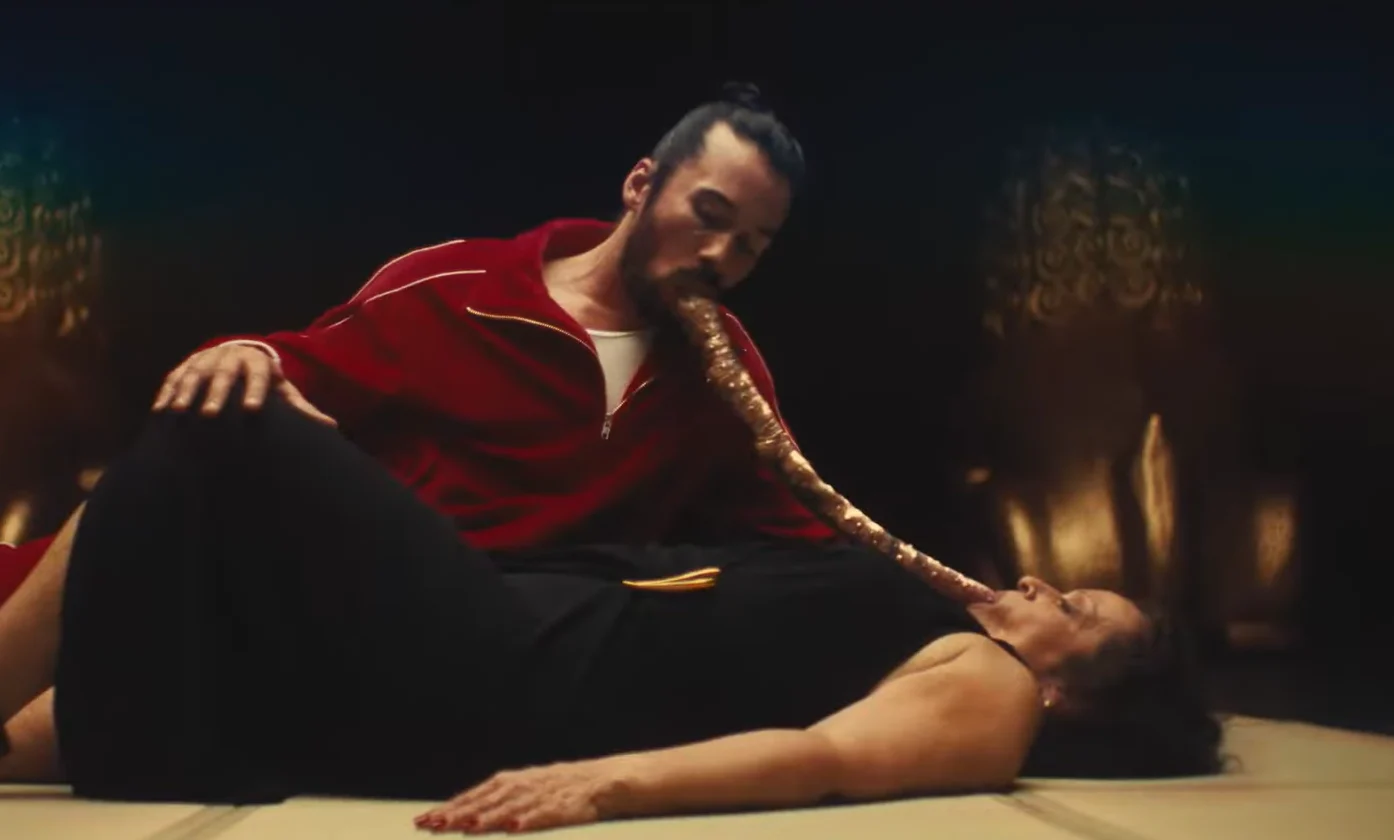
Desperate, they seek help from Joey’s mysterious ex-boyfriend, Brian (Lou Taylor Pucci). Operating out of a highly theatrical compound, Brian is a tracksuit-wearing, chicken-nugget-eating narcissist who unwinds through hip-hop dance routines.
Oh, and he’s also an extraterrestrial parasite.
A single carnal stroke from his hand (or hidden tentacles) acts like a psychological narcotic, instantly erasing all anxiety, grief, and past trauma. Joey and Craig quickly become desperately addicted to Brian’s euphoric, heroin-like touch. This sparks a toxic, competitive rift between the two best friends.
And that’s before they are hit with the horror of what Brian has planned for humanity.
However, it’s also a poignant, deeply personal allegory for mental illness and the exhausting fantasy of a quick fix. Heimann uses the alien’s tactile euphoria to represent the deceptive allure of substance addiction and toxic relationships.
The characters are thoroughly imperfect and deeply flawed victims who use their bond as an emotional shield to avoid growing up. But that won’t make you root for them any less, in large part because the performances are so strong.
This visually striking film embraces an unapologetic, pansexual erotic energy. Camp, body horror, and cosmic kink are used to explore how desire operates outside traditional boundaries.
It’s wonderfully weird, but it never loses sight of its emotional core, nailing a tonal high-wire act with nary a stumble.
It’s not subtle, but it is sensational.
Tune in if you crave a quick fix of queer body horror, tentacle kink, messy trauma comedy, and utter originality.
The obvious rental pick this week is Curry Barker’s massive box-office hit Obsession, which arrives on Premium VOD on June 30. But given that film’s killer word of mouth, you probably don’t need me to give you another reason to check it out.
Besides, this column is all about discovery. So let’s look at another film about toxic love that pairs beautifully with Obsession.
Written and directed by Alex Noyer (Sound of Violence), Love Is the Monster is a blood-soaked Finnish folk horror film that explores the lethal intersection of relationship trauma and pagan worship.
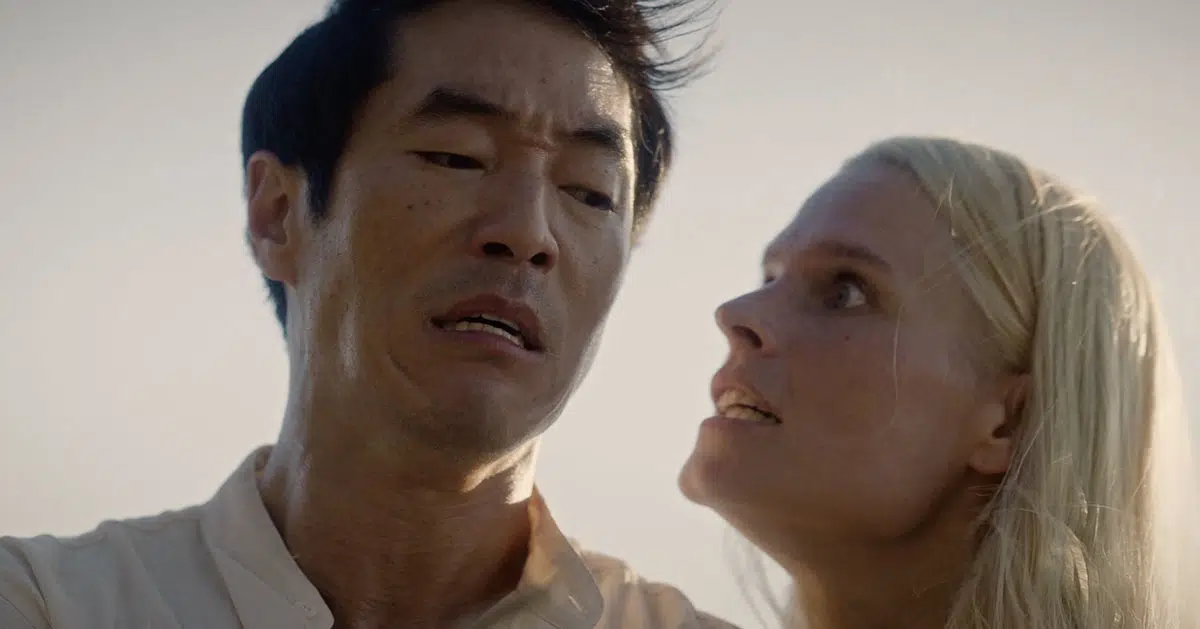
The story follows Ana (Madeline Zima) and her husband Justin (Leonardo Nam), a couple trying to repair their marriage after it was shattered by infidelity. They travel deep into the Finnish wilderness during the summer solstice to attend an exclusive, high-end couples retreat run by charismatic shaman Tiina (Milla Puolakanaho).
Tiina promises to help the guests rekindle their fractured relationships, but the camp is really a front for a cult that worships an ancient Finnish deity of love, lust, and fertility.

Every couple at the retreat arrives deeply broken. Tiina weaponizes their desperation, substituting real emotional healing with lust under the guise of spiritual liberation. Sexual obsession becomes a destructive, primal force. Love becomes a literal monster, stripping away logic and leaving the characters defenseless against external predation.
With modern folk horror roots, the narrative relies heavily on environmental isolation, as in Midsommar. The serene, idyllic setting only makes the underlying rot of the cult’s rituals feel more sinister.
Puolakanaho shines as the cult leader, shifting effortlessly from endearing hippie guru to terrifying religious zealot. The score contributes to an ominous and atmospheric folk nightmare, while the gruesome practical effects in the third act are a gorehound’s delight.
It’s flawed. The narrative meanders, the CGI is awkward enough to hinder immersion at times, and the characters can be hard to root for.
But it’s also a nasty folk horror oddity that delivers for fans of sex, gore, and creative B-movie experimentation.
Tune in if you desire folk horror, horny supernatural chaos, and pagan sex rituals.

She’s a lover, he’s a fighter. Together, they’re CHEER AND LOATHING. Tune in to hear your hosts, Stephanie (Cheer) and Casey (Loathing), clash over the films they love — and the ones they love to hate.
In this holiday extravaganza episode of Guilty Pleasures, join hosts Stephanie, Kelly, and our newest addition, Jonathan (Jack was tied up in tinsel and couldn't join us), as they unwrap the bizarre and unhinged world of holiday cinema. They dive into the depths of Elves, a film that's as chaotic as it is entertaining. It's a sleigh full of questionable decisions, diabolical dialogue, absurd plot twists, wildly offensive antics, and unhinged holiday mischief.
And that's not all! In the second half of the podcast, join your festive cinephile friends for a look at four more ”nutty as a fruitcake” holiday treats: A New York Christmas Wedding, Elf Bowling, A Medea Christmas, and Jack Frost. Plus, we each offer a bonus Christmas flick guaranteed to make you say, ”Ho, Ho, HO-LY Hell!”
Expect laughter, disbelief, and a spirited debate about what truly makes a movie a guilty pleasure. Don't miss this festive journey through the weirdest corners of holiday films!







Follow Us!