


The best true crime horror films do more than explore human monstrosity; they reflect the horror of collective guilt and societal complicity.

No time to read? Click the button below to listen to this post.
The most terrifying aspect of true crime isn’t just the perpetrator’s actions, regardless of how barbaric, inhumane, and gut-wrenching those actions are. There’s also an insidious hidden horror—the realization of how often those around the perpetrators choose to look the other way. While horror films frequently explore supernatural threats or masked killers, a subset of true crime horror films delves into something far more unsettling: our collective capacity for inaction in the face of evil.
These sometimes impossibly-hard-to-watch films force us to confront an uncomfortable truth: monsters don’t just exist in isolation; they thrive in environments of collective silence and willing blindness.
1. The Girl Next Door (2007): The Horror of Neighborhood Complicity

Based on the tragic real-life case of Sylvia Likens, The Girl Next Door serves as perhaps the most devastating examination of community-wide moral failure in true crime horror. The film shows how an entire neighborhood becomes complicit in the torture of a teenage girl, with adults choosing to ignore obvious signs of abuse while children are gradually drawn into participating.
What makes the film particularly powerful is its exploration of how ordinary people can become accomplices to horror through small, incremental choices to remain silent.
2. Snowtown (2011): Poverty, Power, and Collective Guilt

Justin Kurzel’s unflinching examination of the Snowtown murders in Australia demonstrates how socioeconomic conditions and community dynamics can create perfect breeding grounds for violence. The film shows how serial killer John Bunting manipulated an entire community’s fears and prejudices, turning neighbors into either active participants or willing bystanders to his crimes. Through its clinical documentary-style approach, Snowtown illustrates how poverty and social isolation can make communities vulnerable to manipulative predators.
3. Compliance (2012): The Banality of Collective Evil

Perhaps no film better illustrates how ordinary people can become complicit in abuse than Compliance. Based on the notorious “strip search phone call scam,” the film demonstrates how authority, social pressure, and the human tendency to defer responsibility can lead to devastating consequences. What makes Compliance particularly disturbing is its authenticity—similar incidents occurred at multiple locations across America, suggesting a systemic vulnerability to authoritarian manipulation.
4. Nitram (2021): Institutional Failure and Preventable Tragedy

A more recent addition to the genre, Nitram examines the events leading up to the Port Arthur massacre in Tasmania. The film meticulously documents how multiple systems—mental health, gun control, and community support—failed to prevent an obviously troubled individual from committing mass murder. Through its careful character study, “Nitram” illustrates how societal indifference and institutional dysfunction can have catastrophic consequences.
5. Polytechnique (2009): Gender, Violence, and Societal Blindness

Denis Villeneuve’s stark black-and-white film about the École Polytechnique massacre examines how societal misogyny and institutional indifference enabled a tragedy. The film stands out for its unflinching examination of how warning signs of gendered violence are often ignored or dismissed until it’s too late. Through its clinical approach, Polytechnique forces viewers to confront their own potential complicity in systems that enable violence against women.
6. My Friend Dahmer (2017): Missing the Warning Signs

While taking a more subdued approach than traditional horror films, My Friend Dahmer provides a chilling examination of how a community—including teachers, parents, and students—can normalize and even encourage disturbing behavior. The film suggests that Jeffrey Dahmer’s evolution from troubled teenager to serial killer happened in plain sight, with multiple authority figures choosing to look the other way rather than intervene.
7. The House That Jack Built (2018): The Enablers of Evil

Lars von Trier’s controversial film, while partially fictionalized, draws from various true crime cases to examine how a serial killer operates within society. The film is particularly effective in showing how Jack’s murders are enabled by social politeness, institutional incompetence, and people’s unwillingness to trust their instincts about disturbing behavior. Through its episodic structure, it demonstrates how a killer can exploit society’s blind spots and collective denial.
8. Memories of Murder (2003): Institutional Incompetence and Rural Isolation

Bong Joon-ho’s masterful film about South Korea’s first confirmed serial murderer explores how institutional failures, police brutality, and community denial enabled a killer to operate for years. The film is particularly powerful in showing how authoritarian police tactics and community distrust of authorities created perfect conditions for the killer to evade capture while innocent people suffered from systemic abuse.
9. Henry: Portrait of a Serial Killer (1986): Urban Anonymity and Social Indifference

Based loosely on serial killer Henry Lee Lucas, this landmark film explores how urban isolation and societal indifference enable predators to operate undetected. The film is particularly effective in showing how Henry exploits society’s willingness to ignore violence against marginalized people while also examining how poverty and social dysfunction create environments where violence can flourish.
10. Rillington Place (1971): The Facade of Respectability

This classic British film examines how serial killer John Christie used his position as a seemingly respectable member of society to commit murders while neighbors and authorities ignored warning signs. The film is particularly powerful in its examination of how class prejudices and social hierarchies can blind people to evil, hiding behind a veneer of respectability.
11. The Boys (1998): Suburban Indifference and Family Complicity

This Australian film’s examination of the horrifying Anita Cobby murder case — in which a nurse is brutally attacked by five men, repeatedly sexually assaulted, and left for dead — reveals how family dynamics and suburban apathy can enable violence. The film is particularly effective in showing how the killers’ family members and neighbors ignored escalating warning signs, demonstrating how close-knit communities can become complicit through their silence.
12. The Treatment (2014): Institutional Failure in Child Protection

Often described as one of the most disturbing films ever made, The Treatment is based on Mo Hayder’s novel of the same name but is inspired by real cases. This hard-to-watch Belgian film provides a haunting examination of how institutional failures and community silence enable child abuse rings to operate. The film is particularly powerful in its depiction of how societal reluctance to acknowledge certain forms of evil can create safe harbors for predators. Warning, however, that this film is definitely not for the squeamish and will test the resolve of even the most hardened horror fan.
13. The Golden Glove (2019): Marginalization and Societal Blindness
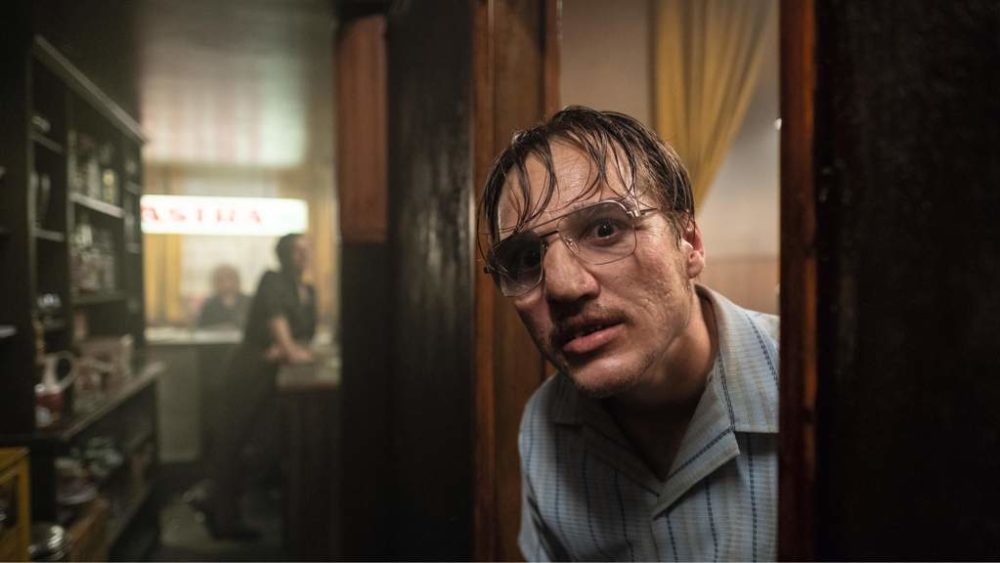
While we’re on the subject of unflinchingly disturbing films that may alienate most audiences, Fatih Akin’s sleazy and distressing The Golden Glove is a German extreme horror film about serial killer Fritz Honka. It shows how he operated in plain sight in Hamburg’s red-light district. The film powerfully illustrates how society’s willingness to ignore violence against sex workers and marginalized communities creates hunting grounds for predators.
14. Citizen X (1995): Bureaucratic Denial and Systemic Failure

This film about Soviet serial killer Andrei Chikatilo (The Red Ripper), convicted of murdering 52 women and children, powerfully demonstrates how bureaucratic denial and systemic dysfunction can enable prolonged killing sprees. It shows how political systems can prioritize maintaining appearances over protecting citizens, creating perfect conditions for predators.
15. The Frozen Ground (2013): Ignoring the Marginalized

The lesser-known true crime film The Frozen Ground about serial killer Robert Hansen shows how Alaska police ignored the disappearances of sex workers, demonstrating the effects of societal prejudices against marginalized communities — allowing a serial killer to operate undetected for years.
…
IN CONCLUSION
In an era where true crime content often focuses on the sensational aspects of violence or the psychology of perpetrators, these films stand out for their willingness to implicate us all in the machinery of horror. They suggest that the real terror isn’t just in what people do but in how many of us choose to do nothing.










Follow Us!